
Guides › System
Command Mode vs Twine Mode
Your Aniimo can fight beside you, or you can become it. What you are really choosing is who does the aiming.
The short version
- Command Mode keeps you and your Aniimo as two separate fighters. The creature acts at your command.
- Twining merges you with the creature and puts you in direct control of it.
- Twining grants you the Aniimo's movement style, body, powers and abilities, not just its attacks.
- Using an Aniimo's abilities while Twined gives you more direct control over where those abilities are aimed.
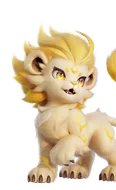
- Each starter has its own combat transformation form. Helion's is Soleon.
Aniimo gives you two ways to fight with a creature, and they are not two difficulty settings on the same thing. They are different arrangements of who is in the fight.
In the first, the creature fights alongside you at your command. There are two of you on the field, and you tell it what to do. In the second, called Twining, you merge with the creature and control it directly. There is one of you, and it is the Aniimo.
Everything else follows from that split. The rest of this page is about what changes when you stop directing a creature and start being one.
Command Mode and Twining, side by side
Command Mode is the arrangement most players picture when they hear "creature combat." You and your Aniimo occupy the field together, and the creature fights at your command. You are directing it.
Twining removes that layer. You merge with the creature and control it directly, which means the gap between deciding and doing closes. What the Aniimo has is what you have: its movement style, its body, its powers, its abilities. You are not borrowing a single attack from it. You take the whole package, including how it moves.
That last part is worth sitting with. Movement style is not a minor inclusion. A creature that moves differently from you puts you in different places on the field, and being somewhere different is half of what combat is.
Command Mode
- The creature fights alongside the player.
- The creature acts at the player's command.
- Offered as the alternative to Twining.
Twine Mode
- The player merges with the creature.
- The player controls the creature directly.
- Grants the Aniimo's movement style and body.
- Grants the Aniimo's powers and abilities.
Control is the real difference
The most concrete thing Twining changes is aiming. Using an Aniimo's abilities while Twined gives you more direct control over where those abilities are aimed. Commanded from outside, that control is less direct.
For anything that has to land in a specific spot, that is the whole argument. When you are the one holding the ability, you point it. When the creature is holding it, you have asked for it rather than placed it.
Pair that with inheriting the creature's movement style and the picture gets clearer. Twining gives you the aiming and the positioning at once, from inside the same body. Command Mode keeps you and the creature as separate pieces on the board, which is its own thing, but it is not the mode you pick when precision is the problem you are solving.
more direct control
Aiming abilities while Twined
Transformation forms, and where the game teaches you this
Each starter Aniimo possesses a unique combat transformation form. Helion's is Soleon.
Lunara and Helion are the two special creatures introduced early in the story to teach the twining mechanic, and the lesson comes right after you select a starter. So you will have Twined before you have made most of your real decisions about how you fight. The starter choice itself is covered in full in "Helion or Lunara: Choosing a Starter."
Where to start
Treat Twining as the mode you reach for when you need to place something exactly, and Command Mode as the one where you and the creature stay separate. You are taught Twining early with Helion or Lunara, so the habit is available from the start. Use it.
Every fact on this page was re-checked against the released game on 18 September 2026.