
Guides › System
Twine health pools and untwining in combat
Twining doesn't top up your health. It moves you onto your Aniimo's own bar, built from its stats. Learn what that changes, and when to untwine and fight beside it.
The short version
- When you twine into an Aniimo you get a new health bar built from that creature's own stats. It is a separate pool, and it does not heal the Pathfinder's own gauge.
- Press C to twine. You take direct control of the Aniimo's basic attack, its two energy-consuming active skills and an evasive move whose exact form varies by creature.
- Twining is how you dodge specific attacks and area-of-effect abilities in real time, and it gives you more direct control over where your Aniimo's abilities land.
- Untwining puts you back in human form. You fight alongside your active Aniimo and support it with your own attacks, skills and commands.
- A creature's quirks come with it when you twine: Cornet takes more damage while airborne, which is the tradeoff for its flight-based playstyle.
If your health bar suddenly looks different in a fight, the cause is almost always twining. When you twine into an Aniimo, the game swaps you onto that creature's own health. Your Pathfinder's health stays where it was.
This guide covers what that separate health pool means, what you control while twined, and what changes when you untwine and fight in human form next to your Aniimo. The wider combat system (shared energy, presets, Command Mode in full) has its own pages. This one is about twining, untwining and whose health you are spending.
Twining gives you a second health bar, not a heal
Twining into an Aniimo gives you a fresh health bar based on that creature's own stats. It is a separate health pool in combat. It is not a heal for the Pathfinder's own gauge, even though it can look like one the first time you see it.
That is the core of most confusion about health in Aniimo. While you are twined, the creature takes the damage and the creature's stats decide how much it can take. Your Pathfinder's bar is a different number, tracked separately. So when people ask about Aniimo stats, this is one place those stats show up very directly: they set the size of the health bar you play on while twined.
Twining is a merge. The Pathfinder enters the Aniimo's mind and the two act as one. You control the creature's form, movement, mobility abilities and combat abilities, including its moves, skill attacks and ultimate transformations. You are playing the creature directly, not commanding it from outside.
What you control while twined
Press C to entwine and take direct control of an Aniimo. You get its basic attack, two energy-consuming active skills and an evasive maneuver. The evasive move is not the same everywhere; its exact form varies by creature, so expect a new Aniimo to dodge differently from your last one.
Combat in Aniimo is real-time action, not turn-based, and it is split into Command Mode and Twine Mode. It asks for active movement, dodging, cooldown-based skills, team switching and stamina management, with sprinting and dashing as part of normal movement. Prime Energy is the stamina system.
Twining matters because of two things you cannot do as well from outside. First, you move and dodge as your Aniimo in real time, which is what you need to get out of specific attacks and area-of-effect abilities. Second, using abilities while twined gives you more direct control over where they are aimed. When a fight needs precise dodging or precise placement, twine in.
Untwining and fighting as the Pathfinder
Your human character, the Pathfinder, fights directly in combat alongside your Aniimo. Untwining is how you get there. It puts you back in human form next to your active Aniimo, and you support it with attacks, skills and issued commands.
This is a different arrangement from twining. Twined, there is one body on the field and it is the creature's, running on the creature's health. Untwined, there are two of you. In Command mode the Pathfinder stays on the field directing the Aniimo, issuing abilities and tactical orders while the Aniimo fight automatically.
One visible side effect: the Alpha mutation makes an Aniimo noticeably larger than standard members of its species. You can see this on wild Alphas, and you can also see it on your own Alpha once you untwine and it is standing beside you.
Twine Mode
- A fresh health bar based on the creature's own stats
- Move and dodge as your Aniimo in real time to evade area attacks
- Basic attack, two energy skills and an evasive maneuver
- More direct control over where abilities are aimed
Command Mode
- The Pathfinder stays on the field in human form
- Your Aniimo fight automatically
- You issue abilities and tactical orders
- You support with your own attacks and skills
How a creature's build carries into the twine
Because a twine runs on the creature's own stats and kit, its strengths and weaknesses become yours for as long as you are inside it.
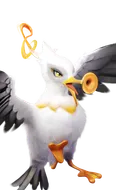
Cornet is the clearest warning. It takes more damage while airborne, which is the tradeoff for its flight-based playstyle. Twined into Cornet, staying in the air is a real cost to the health pool you are playing on.
Other creatures reward learning their kit. Thornblade's basic attack string is a three-hit melee barrage, and those basic attacks can consume Sword Dance stacks to deal up to 180% increased damage. Besauce is built around resource generation and specialises in restoring and maintaining EP. Which one you twine into changes what a good fight looks like, not just how much health you have.
180%
Thornblade Sword Dance bonus
Where the game teaches twining
You meet twining early. After you choose a starter, the game teaches you the mechanic, and two special creatures introduced early in the story, Lunara and Helion, are there to teach it. Each starter Aniimo has its own unique combat transformation form; Helion's is Soleon.
The opening quests work as a tutorial covering movement, catching, twining with Aniimo, combat and elemental counters. If the health swap caught you off guard there, it is worth replaying a fight in your head with this in mind: the bar that dropped belonged to the creature, not to you.
Where to start
Treat twined health as the creature's bar, not a refill of yours. Twine in when you need to dodge area attacks or aim precisely. Untwine when you want the Pathfinder on the field adding attacks, skills and commands beside your Aniimo. And before you twine into something like Cornet, know what its kit costs you.
Most of this page was re-checked against the released game on 27 September 2026. The rest has not been re-confirmed since release.
