
Guides › System
List of Aniimo skills and abilities
What individual Aniimo skills actually do in a fight: which ones heal, which ones hit at range, and which ones pay out extra when you meet their condition.
The short version
- Withering Bloom damages and heals the whole team at once, and heals for double when only one enemy is in proximity.
- Glide skills combine repositioning with damage, so moving out of danger is also your attack.
- Cloud Shield absorbs incoming damage and reduces stamina consumption.
- Fire Kick opens with an evasive leap and hits harder if that dodge avoids an attack.
- Helion and Lunara both build something over a fight: Solar Halo from continuous attacks, Silver Moon Mark stacks from casting skills.
Aniimo skills tend to do more than one job at a time. A heal that also deals damage. A dodge that pays extra if it lands. A shield that also slows your stamina drain. Reading the skill description is usually not enough, because the interesting part is the condition attached to it.
What follows is a look at individual skills and creature moves grouped by the job they do in combat, rather than by creature. Where two skills do the same job in different ways, that comparison is the useful part.
One thing to keep in mind throughout: certain Aniimo can access additional moves beyond their default moveset. What a creature shows you at first is not always everything it has.
Healing that arrives attached to damage
Withering Bloom is a Fragrancier skill, and it does two things in one cast. It deals damage to targets in range and restores HP to the entire team. That alone makes it good value. The part worth learning is the condition: Withering Bloom provides double healing when only one enemy is in proximity.
That inverts the usual instinct. The biggest heal comes in the fight where a team heal feels least urgent, which is a reason to pull a single target away from the group rather than swinging into a crowd and hoping the numbers add up.
Healing Dance is the plainer option. It deploys an area of effect that restores health across the entire team, with no damage component and no condition to satisfy. You place it and your team stands in it. Flutternym works the same territory from two directions: its active healing ability creates an area of effect circle that heals all teammates standing within it, and it summons a ghost that restores player HP whenever a skill is cast.
Double
Withering Bloom healing with one enemy in proximity
Ranged pressure and staying out of reach
Star Glide inflicts ranged magical damage while flying over enemy targets, which means the attack and the repositioning are the same action. You are not choosing between damage and safety on that cast.
Stellarys builds on the same idea. Its Glide skills, such as Shooting Star Glide, let it ride a star through the air to reposition around enemies and avoid attacks, dropping stars that damage its target as it goes. Used well, a Glide is an escape that still does your damage rotation for you.
Shooting Stars is a Celestis combat skill that shoots stars at a target to deal damage. The point of it is not the number but the distance: it lets you pressure enemies safely, which matters when the alternative is standing inside their swing to contribute anything at all.
Defence you have to time
Cloud Shield absorbs incoming damage, which is the obvious use. It also reduces stamina consumption, and that is the reason to keep it up rather than saving it for the moment you expect a hit. A skill that pays out whether or not anything connects is a skill you can afford to use early.
Fire Kick works the other way round. It begins with an evasive leap, and the skill deals increased damage if that dodge successfully avoids an incoming attack. Cast it into nothing and you get a kick. Cast it into an attack you read correctly and you get a bigger one. It rewards watching the enemy rather than watching your cooldowns.
Status, break and hitting more than one target
Fire Bolt is a ranged skill that inflicts fire status, so it does work after the cast has finished.
Shadow Cut, an ability of the Pawney line, is used to deplete an enemy's break health. That is a different bar from the one you are usually watching, and a skill aimed at it is doing a job no amount of ordinary damage covers.
Shelly's E ability deals area-of-effect splash damage to multiple targets, which makes it the answer to a group rather than a single enemy.
Traits that build up over a fight
Some Aniimo get stronger the longer you keep swinging. Helion's trait generates a Solar Halo through continuous attacks, which empowers its abilities. Its kit gives you plenty to spend that on: a diving leap attack, a spinning area-of-effect strike that pulls nearby enemies toward its centre, and a buff to its own damage. The pull is worth noting, because gathering enemies into one place is what makes the rest of an area-of-effect kit land.
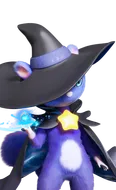
Lunara accumulates rather than escalates. Using skills generates stacks of Silver Moon Mark through her trait, Lunar Power. Consuming those stacks provides self-sustain, which aids in extended fights and reduces the need to retreat. That is a different kind of strength from raw damage. It means the fight you would normally have to break off is a fight you can simply keep having.
Helion: Solar Halo
- Generated through continuous attacks.
- Empowers Helion's abilities.
- Kit includes a diving leap attack and a spinning area of effect strike that pulls nearby enemies toward its centre.
- Also buffs its own damage.
Lunara: Lunar Power
- Using skills generates stacks of Silver Moon Mark.
- Consuming stacks provides self sustain.
- Aids in extended fights.
- Reduces the need to retreat.
Where to start
Learn the conditions before the numbers. Withering Bloom's proximity rule, Fire Kick's dodge and Helion's Solar Halo all change what a skill is worth depending on how you use it, and those are the ones that reward practice.
Every fact on this page was re-checked against the released game on 17 September 2026.