
Guides › System
Aniimo Morphology: How Regional Forms Work
A regional form changes element, stats and habitat, not power or rarity. Here is which creatures have one, where Scorchhowl's five turn up, and how Forest Flamerion spawns.
The short version
- A regional or environmental form is not inherently stronger or rarer than the basic form of the same Aniimo.
- The confirmed differences between forms are element, stats and habitat. Whether forms also get different Ultimate Skills is not settled.
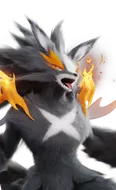
- Scorchhowl has the widest spread of forms: a basic form, Highland and Mountain Wood Homeland forms, a Prism Manor form, and a Thunder form that appears only in storms.
- Jawling's basic and mountain forms both spawn commonly in the Rusted Highlands, so you can pick up both in one area.
- Forest Form Flamerion spawns after 15 Forest Form Sparkies in the area, but whether they must be caught or defeated, and exactly where, is unsettled.
Aniimo does not keep one look per creature. The same species can show up with a different appearance, form or colouration depending on the region and location you find it in, and that variety is a large part of why two players' collections rarely match.
The useful thing to know early is what a form actually changes. It changes the creature's element, its stats and where it lives. It does not make the creature better by default, and it does not make it rarer by default. Treat forms as different tools, not as upgrades.
This page covers how forms are tied to place, what is and is not settled about their differences, and the specific creatures whose forms you are most likely to chase.
Forms follow the map
Creature variants in Aniimo are tied to geography. Appearance, form and colouration vary across regions and locations, and a regional variant is linked to the creature's native biome. If a species lives in more than one kind of terrain, expect it to look and behave differently in each.
Regional forms are only one kind of variant. Creatures can also come as high-potential variants, carry unique traits, or show Prismana variations. These sit alongside regional forms rather than replacing them, so a form tells you where a creature comes from, not everything about it.
What a form changes, and what it does not
Regional and environmental forms are not inherently stronger or rarer. A snow or mountain version of a creature is not a premium edition of the basic one, and you should not hold off on a basic form expecting its variant to outclass it.
What is confirmed is that forms differ in element, stats and habitat. That is enough to matter: a change of element changes what a creature is good against, and a change of stats changes the role it fills on your team.
Whether different forms of the same Aniimo also carry different Ultimate Skills is not settled. It is widely claimed, but the differences that are pinned down stop at element, stats and habitat. Do not build a plan around a form having a unique Ultimate until you have seen it yourself.
Scorchhowl, the creature with the most forms

Scorchhowl is the clearest example of how far forms can go. It has several, each with a different element.
There is a basic form. There are two Homeland forms, Highland and Mountain Wood. There is a Prism Manor form. And there is a Thunder form that is weather-dependent and appears in storms.
That last one is the catch for collectors. The other forms are tied to places; the Thunder form is tied to conditions as well, so being in the right area is not enough if the weather is clear.
Early forms you will run into
Budclaw is one of the first. It has Grass and Rock (Earth) typing, the Carry attribute, and an early-game regional form, so it is likely to be your first encounter with the idea that one species can come in more than one version.
Jawling is the easiest pair to complete. It has a basic form and a mountain form, both are found in the Rusted Highlands, and it is a common spawn there. One area covers both.
Pawney has a Snowfield form, which fits the general rule: the form is named for the environment it belongs to.
Forest Form Flamerion and its trigger

Some forms are not simply found. Forest Form Flamerion spawns after 15 Forest Form Sparkies in the area, which makes it a creature you set up rather than stumble on.
Two parts of that are unsettled. It is not settled whether the Sparkies must be caught or defeated to count. Its location is not settled either: Mistwood, Driftwise Meadow and Berryline Vale all come up, both as rival answers for the one place it appears and as three separate spawn locations.
In practice, work through Forest Form Sparkies in one of those three areas and keep count. If nothing appears, the method or the place may be the variable, so change one at a time.
15
Forest Form Sparkies to trigger Flamerion
Where to start
Pick forms for their element and stats, not because a variant sounds rarer. Collect Jawling's pair in the Rusted Highlands early. Wait for a storm for Thunder Scorchhowl, and treat Forest Flamerion as a test where you change one thing at a time until it spawns.
Most of this page was re-checked against the released game on 4 October 2026. The rest has not been re-confirmed since release.


